European Bus Glass Journal | Market Insights & Analysis | 26 October 2026
Chinese brands accounted for nearly one in three new electric city buses in the European Union in 2025, according to the European Automobile Manufacturers’ Association. ACEA cites the figures in its call for changes to public procurement, alongside concerns about industrial competitiveness and long-term fleet support. The choice facing Europe is more complicated than simply buying locally or buying cheaply.
In a position paper released on 21 October 2026, the European Automobile Manufacturers’ Association (ACEA) reported that Chinese brands captured 32% of the EU market for electric city buses in 2025. The association argues that publicly funded vehicle purchases should give greater weight to industrial value created in Europe, as well as to service, resilience and technological capability.
UITP, representing public transport operators and authorities, supports European preference but warns that requirements must not undermine competition, affordability or the transition to zero-emission fleets. The procurement debate therefore involves both industrial capacity and buyers’ ability to renew their fleets.
At stake is not only where buses are assembled. It is the distribution of engineering work, battery integration, software control, maintenance revenue and aftermarket support across the entire vehicle lifecycle.
What the 32% figure actually measures
The headline number belongs to a specific market segment and year. ACEA’s figures refer to Chinese brands’ share of new EU bus markets in 2025, rather than the percentage of the entire fleet already operating on European roads.
| EU market segment, 2025 | Share attributed to Chinese brands by ACEA |
|---|---|
| All buses, across powertrains | Approximately 9% |
| All city buses, across powertrains | Approximately 20% |
| Electric buses across bus categories | 28% |
| Electric city buses | 32% |
These four figures describe different markets and should not be treated as interchangeable. In particular, a 32% share of new electric city buses does not mean that Chinese-branded buses make up 32% of the EU’s total bus fleet, or even 32% of all new buses.
There is also a distinction between the brand of a vehicle, its country of final assembly and the location where its economic value is created. The figures measure brand share, not the share of buses physically manufactured in China. They cannot, on their own, quantify EU-based employment or component content.
According to ACEA, EU registrations of new buses increased 22.7% in the first half of 2026, reaching 22,590 vehicles. Separately, its October paper states that roughly 60% of newly registered city buses are now battery-electric, without specifying the reporting period for that estimate. The two figures cover different segments and should not be read as a single first-half dataset.
A growing market, but an uneven industrial transition
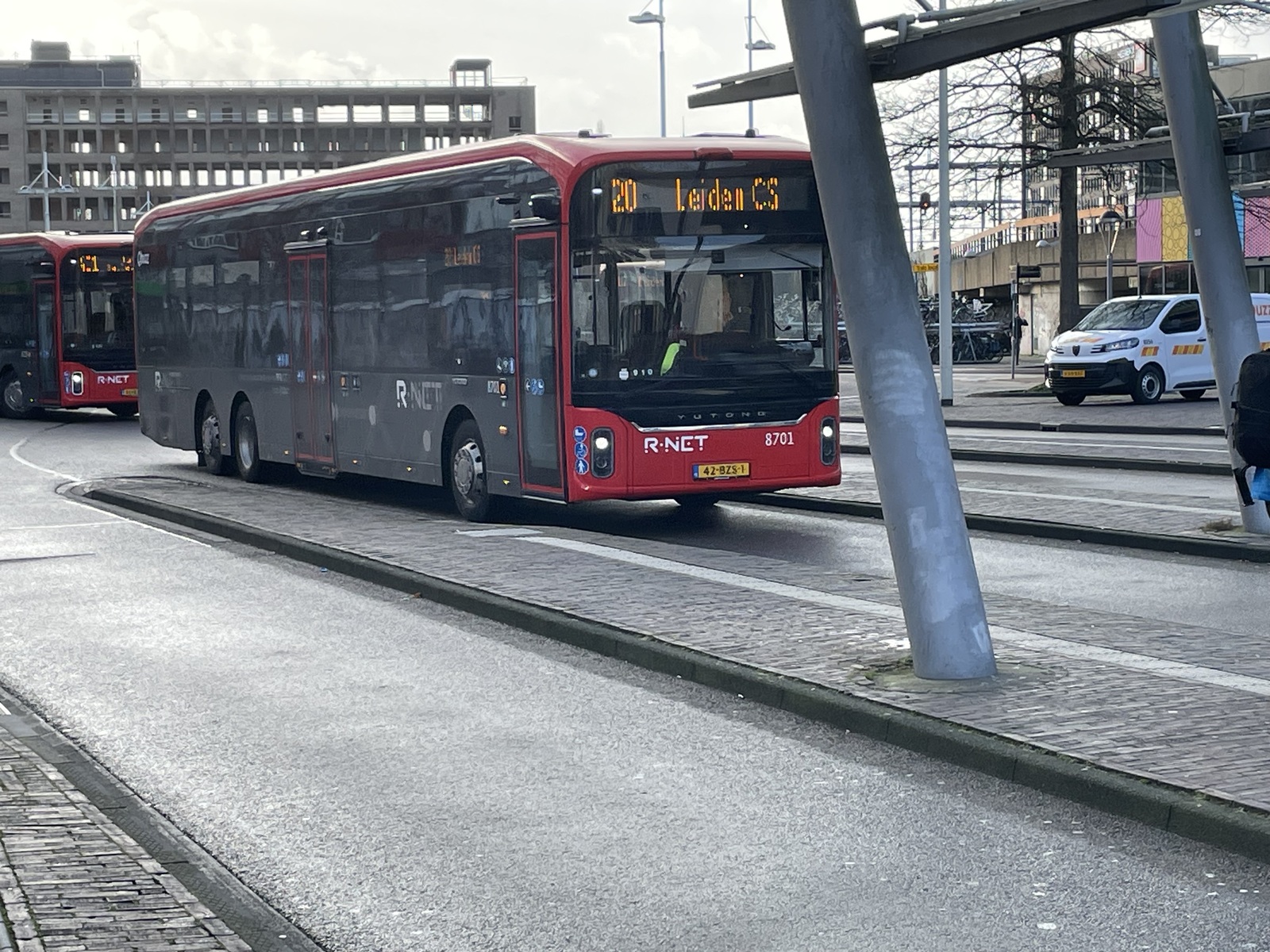
Europe is not short of established bus manufacturers or industrial expertise. ACEA identifies more than 38 bus assembly plants in 12 EU member states, including facilities in Poland, Germany, France, Italy, Spain, Czechia and the Netherlands. It reports that EU bus production increased by 8.9% in 2025.
Nevertheless, faster demand does not automatically produce a proportionate increase in orders for European-built vehicles. Public authorities frequently buy through competitive tenders, and manufacturers must commit to particular prices, vehicle specifications and delivery schedules before an award is confirmed.
ACEA argues that leading Chinese groups enjoy several competitive advantages: deeper vertical integration of battery and powertrain supply, production scale built up in their domestic market, lower engineering and operating costs, and forms of state support. These are the manufacturers’ association’s assessments, not an independent finding that every Chinese supplier benefits equally or that every EU tender has been decided primarily by price.
The relationship between price and delivery time is particularly important. European manufacturers say that earlier disruptions — including the pandemic, component shortages and the parallel introduction of new safety and electric-vehicle technology — constrained production. ACEA believes some of those pressures are easing, while more structural difficulties remain.
Building small, highly customised batches is costly. Ordering long-lead components against a forecast tender is commercially risky if the contract may go to a competitor. That makes a predictable order pipeline almost as important as factory capacity.
A market can therefore grow rapidly while manufacturers face different levels of certainty about future demand.
The €2.9 billion trade deficit needs context
ACEA’s document also highlights changes in the value of EU bus trade. It reports a €2.9 billion EU bus-sector trade deficit for full-year 2025, compared with €1.6 billion in 2023. The association says that imports of buses from China exceeded €1 billion in 2025, growing by almost 70% year on year.
These are significant signals, but they describe different statistical measures. The €2.9 billion figure is the EU’s overall bus trade deficit, not its bilateral bus deficit with China. The amount imported from China is a separate figure and should not be substituted for the overall trade balance.
Trade values also cannot fully explain where a vehicle’s technology was developed, where batteries or components originated, or which companies provide its eventual maintenance. Those questions require supply-chain-level evidence.
ACEA uses the trend to argue for procurement criteria that recognise industrial value creation. The trade balance alone does not establish which procurement policy would best serve operators or European industry.
Source: ACEA position paper (PDF), especially the market and trade sections.
Why public procurement has become the centre of the debate
The European bus market is unusually sensitive to public policy. ACEA estimates that most of the EU’s approximately 680,000 buses in operation provide services commissioned by public authorities, whether through tenders or public service contracts. City bus purchasing, in particular, is closely linked to public funding and fleet renewal programmes.
ACEA is pressing for procurement systems that do more than compare vehicle purchase prices. Its proposals include:
- stronger recognition of value created in Europe through engineering, research, software development and battery integration;
- greater weight for vehicle maintenance, spare parts availability, cybersecurity and long-term services;
- longer and more realistic tender-to-delivery periods;
- framework contracts with committed purchasing volumes, aggregated demand and more standardised technical specifications;
- stable, multi-year funding that makes investment in production capacity easier to plan.
The association also wants proposed European-origin provisions under the Industrial Accelerator Act to be strengthened, including changes to an exemption linked to substantial procurement cost differences.
These are industry proposals, not binding requirements. The Commission presented the Industrial Accelerator Act on 4 March 2026; as checked on 26 October, the European Parliament’s procedure file 2026/0068(COD) records it as awaiting committee decision. The proposed requirements still need to complete the legislative process before becoming law.
ACEA’s preferred approach would assess value created across the supply chain rather than treating final assembly in Europe as sufficient.
That introduces a difficult practical question: how would authorities measure European value added accurately, consistently and without imposing a disproportionate reporting burden on the buyer?
Sources: ACEA position paper; European Commission, Industrial Accelerator Act proposal, 4 March 2026.
The other side of the argument: operators need competition
European manufacturing is important to the bus sector, but public transport operators do not necessarily benefit from having fewer choices.
The International Association of Public Transport (UITP) supports the principle of European preference while advocating a gradual and targeted approach. In its 2026 paper on “Made in EU”, it warns against requirements that could increase costs, reduce competition, create single-bidder situations or delay the transition to zero-emission fleets.
UITP opposes a blanket mandatory rule covering all procurement and says any mandatory framework should have a narrowly defined strategic scope. It also argues that European-origin policy should reflect the availability of suitable suppliers and technologies. When an essential component or vehicle cannot be delivered in sufficient volume or within a workable timeframe, authorities need a practical route to continue operating and renewing their fleets.
This is not necessarily a rejection of industrial policy. Both UITP and ACEA recognise that industrial activity is more complex than the country in which final assembly occurs. Their different emphases reflect the responsibilities of their members.
Manufacturers need sufficient commercial certainty to invest in factories, engineering and supplier capacity. Operators and public authorities need reliable vehicles, competitive tenders and financially sustainable transport services.
The strongest procurement model would have to reconcile both sets of priorities. It would evaluate whole-life value without turning every purchase into an administrative investigation of a manufacturer’s global supply chain.
Source: UITP, Made in EU: The Vision of the Public Transport Sector (2026 position paper).
The aftermarket question: what happens after delivery?
Procurement decisions also affect support throughout a vehicle’s working life. For operators, practical questions include access to technical documentation, parts identification, delivery lead times and service training. A wider mix of suppliers may increase complexity, but it does not automatically mean poorer support.
The ACEA market-share data do not establish a shortage of replacement glass or inferior aftermarket support for any particular manufacturer. Assessing those risks would require model-specific evidence from fleets, distributors and repair networks, rather than assumptions based on brand nationality.
City buses and coaches should not be treated as the same market
ACEA also draws attention to the different pace of technological change in long-distance coaches and interurban services.
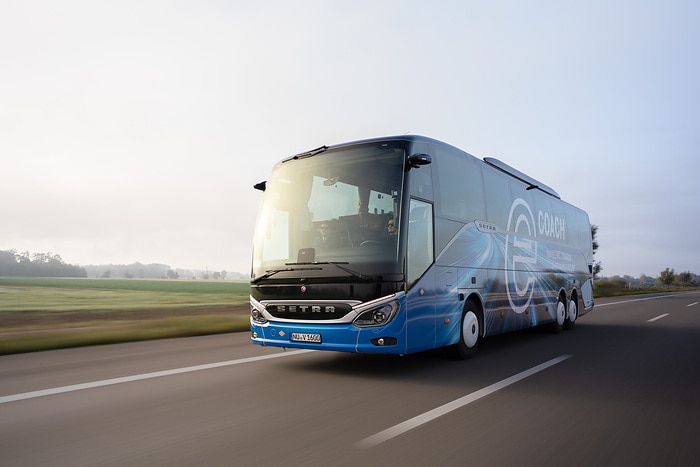
It reports that zero-emission registrations accounted for only 4% of these segments in both 2024 and 2025. Their operating conditions differ from urban buses: routes are less predictable, charging infrastructure is less uniform and many purchases are made directly by private operators.
This distinction matters when discussing market share and industrial policy. The rapid penetration of battery-electric city buses cannot simply be projected onto the whole European coach market.
A Europe-wide transport strategy may need common goals, but different purchasing and operating realities call for different implementation paths.
The next procurement cycle will matter more than the headline alone
ACEA argues that decisions over the next two years will influence Europe’s manufacturing and service base well into the 2030s. Its warning is clear: policy changes introduced only after the next major cycle of fleet orders could arrive too late to affect industrial investment.
That is a consequential argument, but the policy choice is not a straightforward choice based on brand nationality. A buyer deciding between offers must also weigh acquisition price, energy consumption, service availability, delivery reliability, operating costs, technical suitability and the risk of dependence on a narrow supplier base.
Some of these priorities support stronger European industrial capacity; others favour open competition and wider supplier choice. A credible procurement framework must explain how trade-offs are handled rather than pretending they do not exist.
Europe’s electric bus transition is increasingly mature, but its procurement rules and industrial strategy are still being contested. What public authorities decide to value in a tender could shape not only the buses on the road but also the expertise, supply chains and service networks available to maintain them for the following decade.
Sources and methodology
This analysis distinguishes reported market figures and stakeholder positions from EBGJ editorial interpretation.
- ACEA — Bus manufacturing in Europe: urgent action needed, publication dated 21 October 2026. The underlying position paper is dated 5 October 2026.
- ACEA — full position paper, PDF. Source for the four market-share measures, first-half 2026 registrations, European plants, trade figures and procurement proposals.
- European Commission — Industrial Accelerator Act legislative proposal, 4 March 2026. Referenced as a proposal, not an adopted requirement.
- UITP — Made in EU: The Vision of the Public Transport Sector, 2026 position paper. Source for operator and authority concerns about competition, costs, delivery and the pace of decarbonisation.
- European Parliament — procedure 2026/0068(COD). Legislative status checked on 26 October 2026: awaiting committee decision.
Editorial note: Market shares and trade figures are attributed to ACEA and have not been independently recalculated from raw registrations or customs records. Aftermarket implications are analytical questions, not claims of verified glass shortages or model-specific part availability.
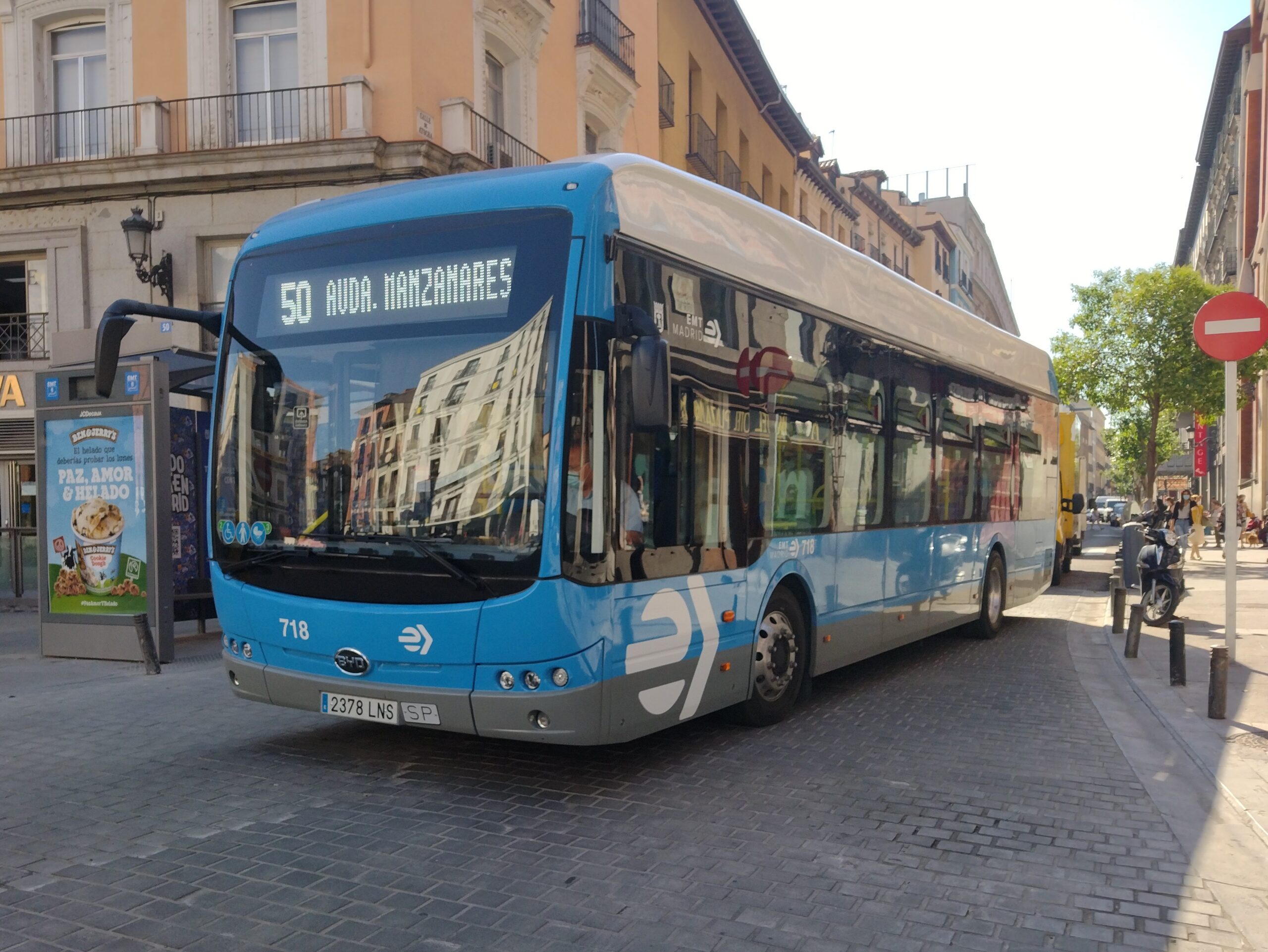
Featured photograph: a BYD electric city bus on EMT Madrid route 50. Photo: Snooze123 / Wikimedia Commons; CC0 1.0. Illustrative photograph from 2021, not a 2025 market-share dataset.